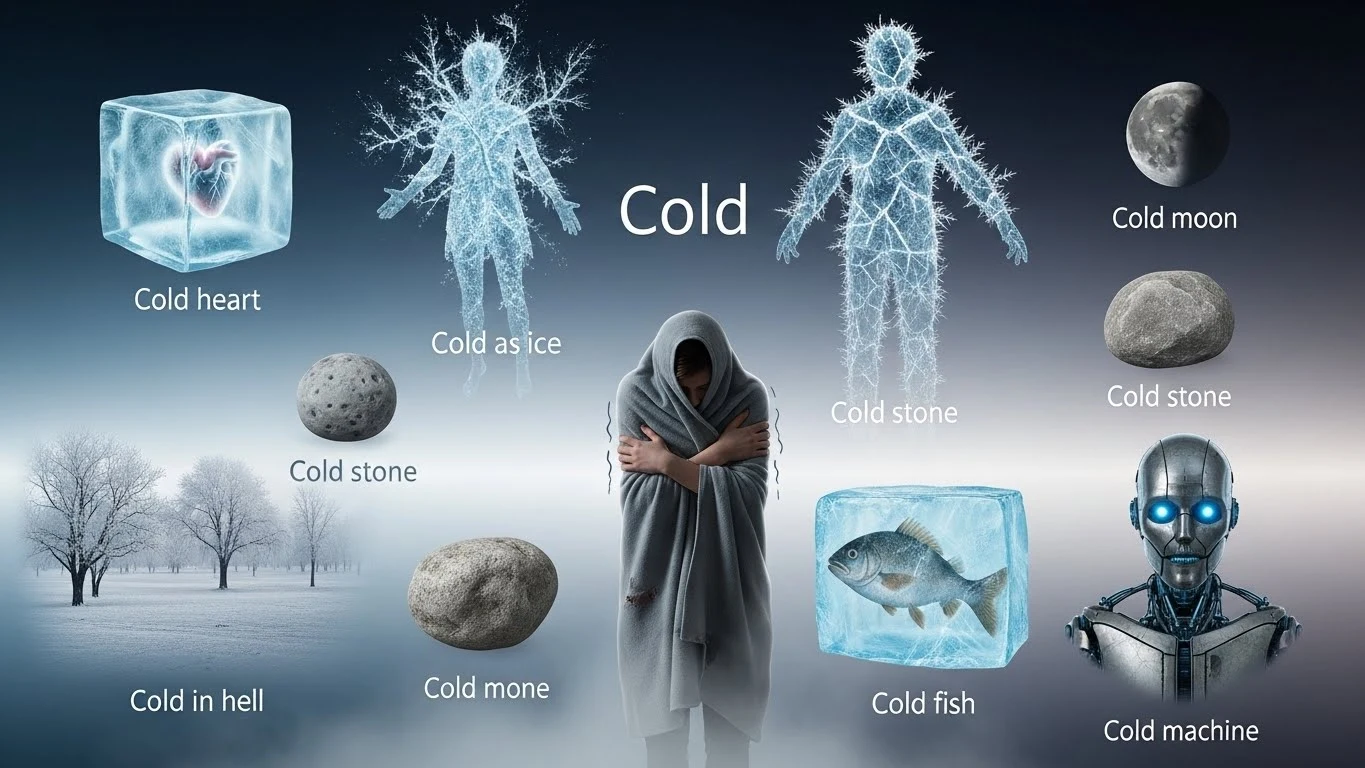
Let’s explore similes for cold together in simple terms, without complicated grammar rules or confusing explanations.
If you’ve ever heard phrases like “cold as ice” or “cold like a freezer,” you’ve already met a simile, even if you didn’t know the name for it.
Similes are one of the easiest and most creative tools in writing. They help you describe feelings, weather, emotions, and experiences in a way that feels real and vivid. Instead of just saying “it was cold,” you can paint a picture that makes the reader feel the chill.
In creative writing, similes bring life to your sentences. They help readers imagine scenes clearly and connect emotionally to your
If you’re a student, a beginner writer, or someone who loves words, learning how to use similes in writing can instantly improve your style.
In this post, we’ll look at clear examples of similes, understand their meaning, and practice creating our own. Let’s explore similes for the cold together step by step.
What Is a Simile? (In Simple Terms)
A simile compares two things using the words “like” or “as.”
It helps describe something more clearly by linking it to something familiar.
For example:
“The air was cold as ice.”
Here, cold weather is compared to ice to make the feeling stronger.
Similes are common in stories, poems, and everyday speech. They make writing more interesting, expressive, and easy to imagine.
20 Similes for Cold (With Meaning & Examples)
1. Cold as ice
Meaning: Extremely cold
Explanation: Ice represents intense cold
- The water was cold as ice.
- Her hands felt cold as ice in winter.
Similes for Unique: Stand-Out Comparisons for Creative Writing
2. Cold like a freezer
Meaning: Very cold temperature
Explanation: A freezer is known for extreme cold
- The room felt cold like a freezer.
- The wind was cold like a freezer blast.
3. Cold as snow
Meaning: Fresh and freezing cold
Explanation: Snow is naturally icy
- His shoes were cold as snow.
- The mountain air felt cold as snow.
4. Cold like the North Pole
Meaning: Freezing cold
Explanation: The North Pole is associated with ice
- The night was cold like the North Pole.
- My fingers felt cold like the North Pole.
Similes for Anger: Simple, Strong, and Creative Examples?
5. Cold as winter ice
Meaning: Sharp, biting cold
Explanation: Winter ice suggests harsh cold
- The road felt cold as winter ice.
- The breeze was cold as winter ice.
6. Cold like a frozen lake
Meaning: Deep, chilling cold
Explanation: Frozen lakes symbolize extreme cold
- The water was cold like a frozen lake.
- His stare felt cold like a frozen lake.
7. Cold as a corpse
Meaning: Lifeless, icy cold
Explanation: Often used in dramatic writing
- His hands were cold as a corpse.
- The metal felt cold as a corpse.
8. Cold like metal in winter
Meaning: Sharp and uncomfortable cold
Explanation: Metal gets icy in cold weather
- The railing was cold like metal in winter.
- The bench felt cold like metal in winter.
9. Cold as frost
Meaning: Light but sharp cold
Explanation: Frost forms in cold air
- The morning air was cold as frost.
- Her breath felt cold as frost.
10. Cold like a glacier
Meaning: Slow, deep cold
Explanation: Glaciers stay frozen for years
- His voice sounded cold like a glacier.
- The cave felt cold like a glacier.
11. Cold as frozen glass
Meaning: Smooth but icy cold
Explanation: Glass can feel icy in winter
- The window was cold as frozen glass.
- The floor felt cold as frozen glass.
12. Cold like an ice cube
Meaning: Small but intense cold
Explanation: Ice cubes are sharply cold
- His drink was cold like an ice cube.
- Her fingers felt cold like an ice cube.
13. Cold as Arctic air
Meaning: Extremely freezing
Explanation: Arctic air is known for chill
- The wind was cold as Arctic air.
- The morning felt cold as Arctic air.
14. Cold like a winter night
Meaning: Quiet, deep cold
Explanation: Winter nights feel colder
- The room felt cold like a winter night.
- The street was cold like a winter night.
15. Cold as a frozen pipe
Meaning: Harsh, uncomfortable cold
Explanation: Frozen pipes suggest severe cold
- The water felt cold as a frozen pipe.
- The metal was cold as a frozen pipe.
16. Cold like dry ice
Meaning: Dangerous, intense cold
Explanation: Dry ice is extremely cold
- The surface felt cold like dry ice.
- His touch felt cold like dry ice.
17. Cold as a blizzard
Meaning: Windy and freezing
Explanation: Blizzards bring extreme cold
- The storm was cold as a blizzard.
- The air hit me cold as a blizzard.
18. Cold like frozen stone
Meaning: Hard and icy
Explanation: Stone holds cold well
- The floor was cold like frozen stone.
- The walls felt cold like frozen stone.
19. Cold as an ice storm
Meaning: Bitter cold
Explanation: Ice storms cause severe cold
- The night was cold as an ice storm.
- The wind felt cold as an ice storm.
20. Cold like winter steel
Meaning: Sharp and unforgiving cold
Explanation: Steel becomes icy in winter
- The rail felt cold like winter steel.
- His tone sounded cold like winter steel.
Practical Exercise: Test Your Simile Skills
Questions
- Complete: Cold as _______.
- Which word completes this simile? Cold like a _______.
- Identify the simile: The air felt cold like ice.
- Fill in: Cold as winter _______.
- Which simile fits freezing water best?
- Choose the simile: Cold as ___ (frost / fire).
- Identify the comparison word.
- Complete: Cold like the ______ Pole.
- Which simile suggests emotional coldness?
- Write your own simile for cold.
Answers & Explanations
- Ice a common cold comparison
- Freezer suggests extreme cold
- “Cold like ice” uses “like”
- Ice winter ice is freezing
- Cold like a frozen lake
- Frost fire is hot
- Like shows comparison
- North known for cold
- Cold like a glacier emotional distance
- Answers may vary creativity encouraged
Conclusion
Similes are powerful tools in creative writing. They help turn simple descriptions into vivid images that readers can feel and imagine.
When you use similes for colds, you’re not just talking about temperature, you’re creating mood, emotion, and atmosphere.
By understanding the meaning of similes and practising simple sentences, you improve both your writing and imagination.
The more you explore examples of similes, the easier it becomes to create your own unique comparisons.
About The Author