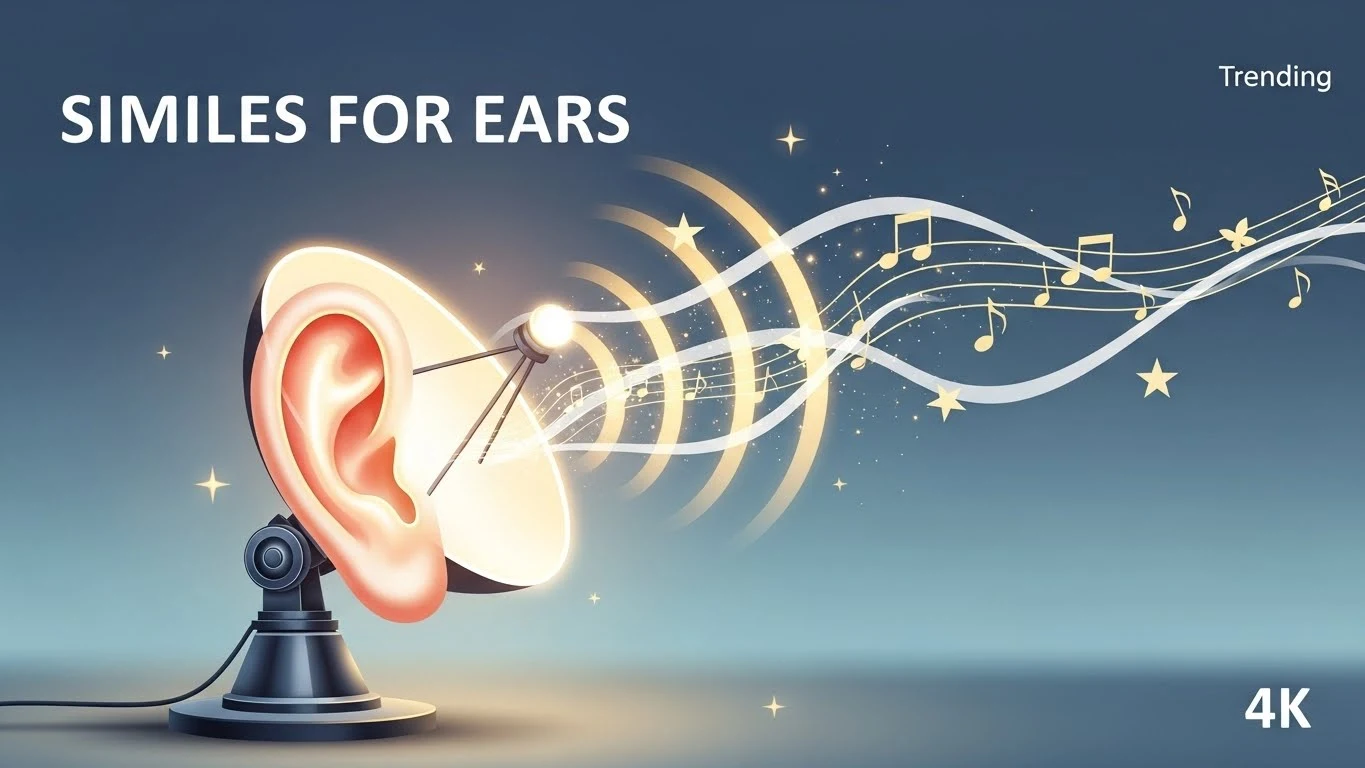
Have you ever tried to describe how someone listens very carefully or how ears look or react in a story? That’s where similes for ears come in handy.
In simple terms, similes help your writing feel more alive, more visual, and more fun to read.
Instead of saying someone “listened closely,” you might say they listened like a cat hearing a distant sound. That small change makes a big difference.
Similes are a key part of creative writing. They compare one thing to another using words like “like” or “as.” When you use similes for ears, you help readers imagine sharp hearing, curiosity, surprise, or even fear.
For example, in stories, poems, and everyday writing, similes turn plain sentences into colorful ones.
In this guide, let’s explore what similes really mean, look at clear examples of similes, and learn how to use similes in writing. Don’t worry you don’t need to be an expert. I’ll explain everything step by step, like we’re learning together.
20 Similes for Ears (With Meaning and Examples)
1. Ears like radar dishes
Meaning: Very alert hearing
Explanation: Suggests someone hears everything around them.
Examples:
- His ears were like radar dishes, catching every whisper.
- She sat quietly, ears like radar dishes during the meeting.
2. Ears as sharp as a fox’s
Meaning: Excellent listening ability
Explanation: Shows clever and alert hearing.
Examples:
- His ears were as sharp as a fox’s in the dark forest.
- Kids often have ears as sharp as a fox’s.
3. All ears like an open door
Meaning: Ready to listen
Explanation: Shows openness and attention.
Examples:
- I was all ears like an open door to her story.
- He stayed quiet, all ears like an open door.
4. Ears perked up like a puppy
Meaning: Sudden interest
Explanation: Shows curiosity or excitement.
Examples:
- Her ears perked up like a puppy at the news.
- His ears perked up like a puppy hearing its name.
5. Ears burning like fire
Meaning: Feeling talked about
Explanation: Often used when someone senses gossip.
Examples:
- My ears burned like fire during the meeting.
- Her ears burned like fire after the comment.
6. Ears wide open like windows
Meaning: Fully attentive
Explanation: Shows readiness to listen.
Examples:
- His ears were wide open like windows.
- She kept her ears wide open like windows in class.
7. Ears twitching like a rabbit’s
Meaning: Nervous or alert
Explanation: Suggests quick reactions to sound.
Examples:
- His ears twitched like a rabbit’s in fear.
- She sat still, ears twitching like a rabbit’s.
8. Ears as sensitive as glass
Meaning: Easily affected by sound
Explanation: Shows delicate hearing.
Examples:
- His ears were as sensitive as glass.
- Loud music hurts ears as sensitive as glass.
9. Ears closed like locked doors
Meaning: Not listening
Explanation: Shows refusal to hear.
Examples:
- His ears were closed like locked doors.
- Her advice fell on ears closed like locked doors.
10. Ears ringing like bells
Meaning: Loud noise effect
Explanation: Describes sound impact.
Examples:
- His ears rang like bells after the blast.
- My ears rang like bells at the concert.
11. Ears stretched like antennas
Meaning: Listening hard
Explanation: Shows focus on sounds.
Examples:
- His ears stretched like antennas.
- Kids’ ears stretch like antennas during gossip.
12. Ears alert like a guard dog
Meaning: Protective listening
Explanation: Shows careful attention.
Examples:
- Her ears were alert like a guard dog.
- He stayed still, ears alert like a guard dog.
13. Ears buzzing like bees
Meaning: Overwhelmed by noise
Explanation: Shows mental overload.
Examples:
- My ears buzzed like bees.
- After hours of noise, her ears buzzed like bees.
14. Ears flat like folded paper
Meaning: Ignoring sounds
Explanation: Shows withdrawal.
Examples:
- His ears lay flat like folded paper.
- Her ears felt flat like folded paper.
15. Ears drinking words like water
Meaning: Listening eagerly
Explanation: Shows interest and hunger for sound.
Examples:
- He drank her words like water with his ears.
- Students’ ears drank the story like water.
16. Ears frozen like ice
Meaning: Shocked or stunned
Explanation: Shows surprise.
Examples:
- His ears froze like ice at the news.
- Her ears felt frozen like ice.
17. Ears buzzing like wires
Meaning: Continuous noise
Explanation: Shows constant sound.
Examples:
- The room left my ears buzzing like wires.
- His ears buzzed like wires all night.
18. Ears sharp like needles
Meaning: Very precise hearing
Explanation: Shows extreme attention.
Examples:
- Her ears were sharp like needles.
- Hunters need ears sharp like needles.
19. Ears flapping like flags
Meaning: Big or noticeable ears
Explanation: Often playful or humorous.
Examples:
- His ears flapped like flags in the wind.
- The dog ran, ears flapping like flags.
20. Ears glued like tape
Meaning: Completely focused
Explanation: Shows deep listening.
Examples:
- His ears were glued like tape to the phone.
- Kids’ ears were glued like tape to the story.
Practical Exercise: Test Your Skills
Questions
- Complete: His ears perked up like a _______.
- Identify the simile: “Her ears were closed like locked doors.”
- What does “ears ringing like bells” mean?
- Complete: Ears as sharp as a _______.
- Is this a simile? “His ears heard everything.”
- Choose the meaning: Ears buzzing like bees.
- Fill in: Ears wide open like _______.
- Identify the comparison word in a simile.
- Complete: Ears glued like _______.
- What does “all ears” suggest?
Answers with Explanations
- Puppy – shows interest.
- Yes – compares ears to locked doors.
- Loud noise effect.
- Fox – sharp hearing.
- No – no comparison used.
- Overwhelmed by noise.
- Windows – open listening.
- Like / As – comparison words.
- Tape – deep focus.
- Ready to listen.
Conclusion
Similes are powerful tools in creative writing. They help readers see, feel, and understand what you mean without long explanations. When you use similes for ears, you add emotion, detail, and personality to your writing. In simple terms, similes turn boring sentences into exciting ones.
Whether you’re writing stories, poems, or even school assignments, learning the meaning of similes and practicing simple sentences will make your writing stronger. You might say similes are like shortcuts to imagination; they quickly paint pictures in the reader’s mind.
Now it’s your turn. Try creating your own similes for ears using things you see every day. The more you practice, the more natural it will feel. Happy writing!

I am Elijah is a visionary writer and creative storyteller, blending imagination with insight to craft words that linger. Known for his fresh perspectives and thought-provoking narratives, Alijah inspires readers to explore the depth of language and the art of expression. As the creative force behind Similixs.com, he shares an endless collection of similes, metaphors, and writing tools to ignite creativity and elevate storytelling for writers everywhere.