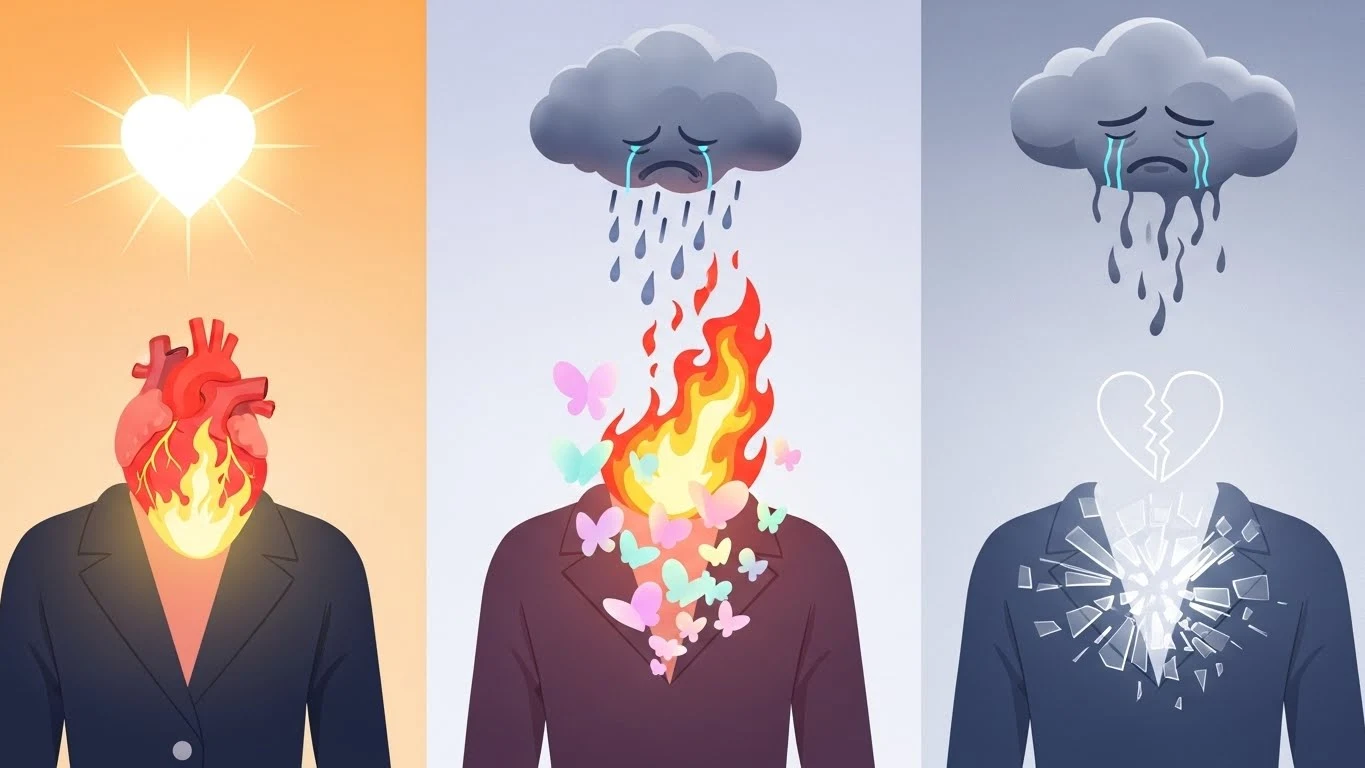
If you’ve ever said someone was as happy as a child on a snow day or as nervous as a cat in a room full of rocking chairs, you were already using similes.
In simple terms, similes compare one thing to another using “like” or “as.” They help readers feel an emotion instead of just reading about it.
Many people search for similes for emotions because they want their writing to sound more alive. And that’s a great goal. A strong (sometimes called “powerful”) simile paints a picture in the reader’s mind. It turns plain sentences into memorable ones.
For example, saying “she was sad” is fine. But saying “she was sad like a wilted flower” feels deeper and more human.
In creative writing, similes are tools. They help you explain emotions that are hard to describe.
They also make your words easier to understand and more fun to read. Let’s explore clear examples of similes, how they work, and how you can use them in your own writing.
20 Similes for Emotions (With Meaning & Examples)
1. Happy like a kid in a candy store
Meaning: Extremely happy
What it conveys: Pure joy and excitement
Examples:
- She smiled, happy like a kid in a candy store.
- He was happy like a kid in a candy store when he got the job.
2. Sad like a rainy day
Meaning: Feeling low or gloomy
What it conveys: Quiet, heavy sadness
Examples:
- She felt sad like a rainy day.
- His voice sounded sad like a rainy day.
3. Angry like a volcano about to erupt
Meaning: Very angry
What it conveys: Anger ready to explode
Examples:
- He stood there, angry like a volcano about to erupt.
- She was angry like a volcano after the argument.
4. Nervous like a cat in a room full of strangers
Meaning: Very nervous
What it conveys: Unease and tension
Examples:
- He felt nervous like a cat in a room full of strangers.
- She waited, nervous like a cat.
5. Calm like a still lake
Meaning: Very peaceful
What it conveys: Control and quiet
Examples:
- Her voice was calm like a still lake.
- He stayed calm like a still lake under pressure.
6. Excited like fireworks on New Year’s Eve
Meaning: Full of excitement
What it conveys: Energy and joy
Examples:
- The kids were excited like fireworks.
- She felt excited like fireworks inside her chest.
7. Lonely like the last leaf on a tree
Meaning: Deep loneliness
What it conveys: Isolation
Examples:
- He felt lonely like the last leaf on a tree.
- She sat there, lonely like a single leaf.
8. Afraid like a mouse near a trap
Meaning: Very scared
What it conveys: Fear and danger
Examples:
- He froze, afraid like a mouse near a trap.
- She felt afraid like a mouse.
9. Proud like a peacock
Meaning: Very proud
What it conveys: Confidence
Examples:
- He walked away proud like a peacock.
- She felt proud like a peacock showing its feathers.
10. Confused like a lost tourist
Meaning: Not understanding something
What it conveys: Mental struggle
Examples:
- He looked confused like a lost tourist.
- She felt confused like a tourist without a map.
11. Relaxed like a cat in the sun
Meaning: Totally relaxed
What it conveys: Comfort
Examples:
- She felt relaxed like a cat in the sun.
- He lay there, relaxed like a cat.
12. Embarrassed like a tomato
Meaning: Very embarrassed
What it conveys: Blushing shame
Examples:
- He turned red, embarrassed like a tomato.
- She felt embarrassed like a tomato in the heat.
13. Hopeful like sunrise after a storm
Meaning: Full of hope
What it conveys: New beginnings
Examples:
- She felt hopeful like sunrise after a storm.
- His words sounded hopeful like sunrise.
14. Jealous like a green-eyed monster
Meaning: Very jealous
What it conveys: Envy
Examples:
- He felt jealous like a green-eyed monster.
- She grew jealous like a monster inside.
15. Shocked like a deer in headlights
Meaning: Completely surprised
What it conveys: Sudden fear or surprise
Examples:
- He stood shocked like a deer in headlights.
- She froze, shocked like a deer.
16. Content like a full stomach
Meaning: Quiet happiness
What it conveys: Satisfaction
Examples:
- He felt content like a full stomach.
- She smiled, content like after a good meal.
17. Anxious like a ticking clock
Meaning: Feeling worried
What it conveys: Pressure and time
Examples:
- She felt anxious like a ticking clock.
- His thoughts were anxious like constant ticking.
18. Brave like a lion
Meaning: Very brave
What it conveys: Courage
Examples:
- He stood brave like a lion.
- She faced fear, brave like a lion.
19. Tired like a drained battery
Meaning: Very tired
What it conveys: No energy left
Examples:
- He felt tired like a drained battery.
- She collapsed, tired like a battery at zero.
20. Loved like a warm blanket
Meaning: Feeling loved and safe
What it conveys: Comfort and care
Examples:
- She felt loved like a warm blanket.
- His words wrapped her, loved like warmth.
Practical Exercise: Try It Yourself
Questions
- Complete: Angry like a ___ about to erupt.
- Identify the simile: He felt calm like a still lake.
- Fill in: Nervous like a ___ in a strange place.
- What emotion does “happy like a kid in a candy store” show?
- Complete: Lonely like the last ___ on a tree.
- Identify the simile word: She was proud like a peacock.
- Fill in: Afraid like a ___ near a trap.
- What emotion is shown by “deer in headlights”?
- Complete: Tired like a drained ___.
- Is this a simile? He felt excited like fireworks.
Answers (With Explanations)
- Volcano – shows explosive anger.
- Simile – it uses “like.”
- Cat – shows nervous behavior.
- Happiness – strong joy.
- Leaf – shows loneliness.
- Like – similes use “like” or “as.”
- Mouse – shows fear.
- Shock or surprise – frozen reaction.
- Battery – no energy left.
- Yes – it compares using “like.”
Conclusion
Similes are simple, but powerful. They help turn feelings into clear pictures. Instead of telling readers what someone feels, you show them. That’s why creative writing similes matter so much. They make stories warmer, clearer, and easier to enjoy.
Once you understand the meaning of similes, you start seeing them everywhere. In books. In songs. Even in daily talk. The best part is that anyone can use them. You don’t need big words. You just need clear comparisons.
So next time you write, pause and ask yourself: What does this feeling look like? Then try turning it into a simile. With practice, your writing will feel more alive, more human, and more fun to read.

I am Elijah is a visionary writer and creative storyteller, blending imagination with insight to craft words that linger. Known for his fresh perspectives and thought-provoking narratives, Alijah inspires readers to explore the depth of language and the art of expression. As the creative force behind Similixs.com, he shares an endless collection of similes, metaphors, and writing tools to ignite creativity and elevate storytelling for writers everywhere.