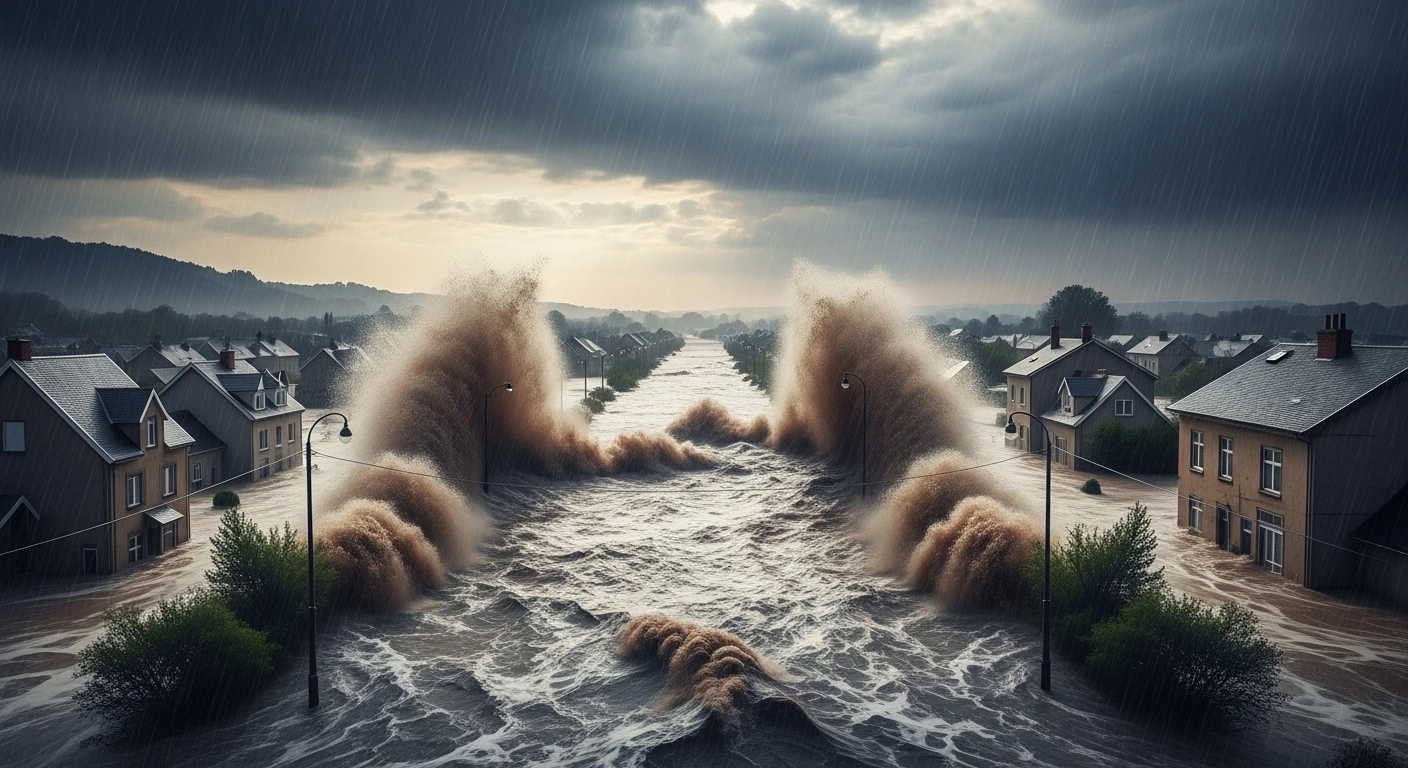
Have you ever tried to describe flooding in writing but felt stuck using the same plain words again and again? You’re not alone.
Flooding is powerful, fast, and emotional but simple words don’t always capture that feeling. That’s where similes come in.
In simple terms, a simile compares one thing to another using words like “like” or “as.” When you use similes for flooding, you help readers see, feel, and experience the water instead of just reading about it.
For example, saying “the water rose quickly” is fine but saying “the water rose like a wild animal breaking free” makes the image stronger.
Similes enhance creative writing by adding color, emotion, and movement. They turn basic sentences into vivid scenes.
If you’re a student, blogger, or beginner writer, learning how to use similes in writing can instantly improve your work.
So, let’s explore clear and easy examples of similes, understand their meanings, and learn how you might say them naturally in real sentences.
20 Similes for Flooding (With Meaning & Examples)
1. Flooding rushed in like a runaway train
Meaning: Fast and unstoppable
Explanation: Shows sudden and powerful movement.
Example Sentences:
• Water poured into the streets like a runaway train.
• The river broke its banks like a runaway train with no brakes.
2. The water spread like spilled ink
Meaning: Slowly covering everything
Explanation: Highlights steady expansion.
Example Sentences:
• Floodwater spread like spilled ink across the fields.
• The streets darkened as water moved like spilled ink.
3. Floodwaters rose like a breathing monster
Meaning: Growing and threatening
Explanation: Adds fear and tension.
Example Sentences:
• The river swelled like a breathing monster.
• Water climbed the walls like a breathing monster waking up.
4. The flood moved like a marching army
Meaning: Organized and unstoppable
Explanation: Shows force and direction.
Example Sentences:
• Water advanced like a marching army.
• The flood pushed forward like soldiers on a mission.
5. Water crashed like waves in a storm
Meaning: Violent and loud
Explanation: Emphasizes chaos.
Example Sentences:
• Floodwater hit homes like waves in a storm.
• The current roared like waves in a storm.
6. The streets drowned like sinking ships
Meaning: Total loss
Explanation: Shows destruction.
Example Sentences:
• Cars disappeared like sinking ships.
• Buildings drowned like sinking ships at sea.
7. Flooding poured in like an open faucet
Meaning: Constant flow
Explanation: Shows never-ending water.
Example Sentences:
• Rain fell like an open faucet.
• Water entered homes like an open faucet left running.
8. The river overflowed like a cup filled too full
Meaning: Capacity exceeded
Explanation: Simple and relatable image.
Example Sentences:
• The river spilled like a cup filled too full.
• Water tipped over the banks like a full cup.
9. Floodwater crept like a silent thief
Meaning: Quiet and unexpected
Explanation: Adds suspense.
Example Sentences:
• Water crept into homes like a silent thief.
• The flood arrived like a silent thief at night.
10. The flood rushed like wild horses
Meaning: Fast and uncontrollable
Explanation: Strong movement imagery.
Example Sentences:
• Water rushed downhill like wild horses.
• Flooding burst through roads like wild horses running free.
11. Water spread like a blanket
Meaning: Covering everything
Explanation: Shows total coverage.
Example Sentences:
• Floodwater covered fields like a blanket.
• The town disappeared under water like a blanket.
12. The flood roared like an angry lion
Meaning: Loud and fierce
Explanation: Adds emotion and sound.
Example Sentences:
• The river roared like an angry lion.
• Floodwaters growled like an angry lion nearby.
13. Streets vanished like footprints in sand
Meaning: Quickly erased
Explanation: Shows sudden loss.
Example Sentences:
• Roads vanished like footprints in sand.
• The flood erased paths like footprints in sand.
14. Water surged like boiling soup
Meaning: Active and chaotic
Explanation: Shows movement and heat.
Example Sentences:
• The river surged like boiling soup.
• Floodwater bubbled like boiling soup.
15. Flooding came like a bad dream
Meaning: Shocking and unreal
Explanation: Emotional impact.
Example Sentences:
• The flood arrived like a bad dream.
• The disaster felt like a bad dream unfolding.
16. The current pulled like a giant hand
Meaning: Strong force
Explanation: Shows danger.
Example Sentences:
• Water pulled debris like a giant hand.
• The flood grabbed trees like a giant hand.
17. Water poured down like heavy tears
Meaning: Emotional rainfall
Explanation: Adds sadness.
Example Sentences:
• Rain fell like heavy tears from the sky.
• Flooding followed rain like heavy tears.
18. The flood spread like fire
Meaning: Rapid and destructive
Explanation: Shows speed.
Example Sentences:
• Water spread like fire through the streets.
• Flooding moved like fire across the land.
19. Homes drowned like paper boats
Meaning: Fragile and helpless
Explanation: Highlights weakness.
Example Sentences:
• Houses floated like paper boats.
• The flood crushed homes like paper boats.
20. Floodwater rose like a rising wall
Meaning: Threatening barrier
Explanation: Shows danger ahead.
Example Sentences:
• Water climbed like a rising wall.
• The flood stood like a rising wall of fear.
Practical Exercise: Practice Using Similes
Questions
- Complete: Floodwater spread like _______.
- Identify the simile: “The river moved like wild horses.”
- Fill in the blank: Water crept in like a ______ thief.
- Which word makes it similar: “Flooding came like a bad dream”?
- Complete: Streets vanished like ______ in sand.
- Choose the simile: fast or slow “like a runaway train.”
- Fill in: Flooding poured like an open ______.
- Identify the meaning: “like a breathing monster.”
- Complete: Homes floated like ______ boats.
- True or False: Similes use “like” or “as.”
Answers (With Explanations)
- spilled ink shows spreading
- “like wild horses” comparison using “like”
- silent shows quiet danger
- “like” signals a simile
- footprints shows quick erasing
- Fast unstoppable movement
- faucet continuous flow
- Growing and threatening
- paper fragile image
- True that’s the meaning of similes
Conclusion
Similes are powerful tools in creative writing. They help turn simple descriptions into strong images that stay in the reader’s mind. When you use similes for flooding, you don’t just explain what happened you show it.
By practicing examples of similes, understanding their meaning, and using simile sentences naturally, your writing becomes clearer and more engaging. The best part? You don’t need fancy words. Simple comparisons often work best.
Now it’s your turn. Look around, imagine the scene, and ask yourself: What does this remind me of? Then write it using “like” or “as.” With practice, creating similes will feel easy and even fun.
About The Author