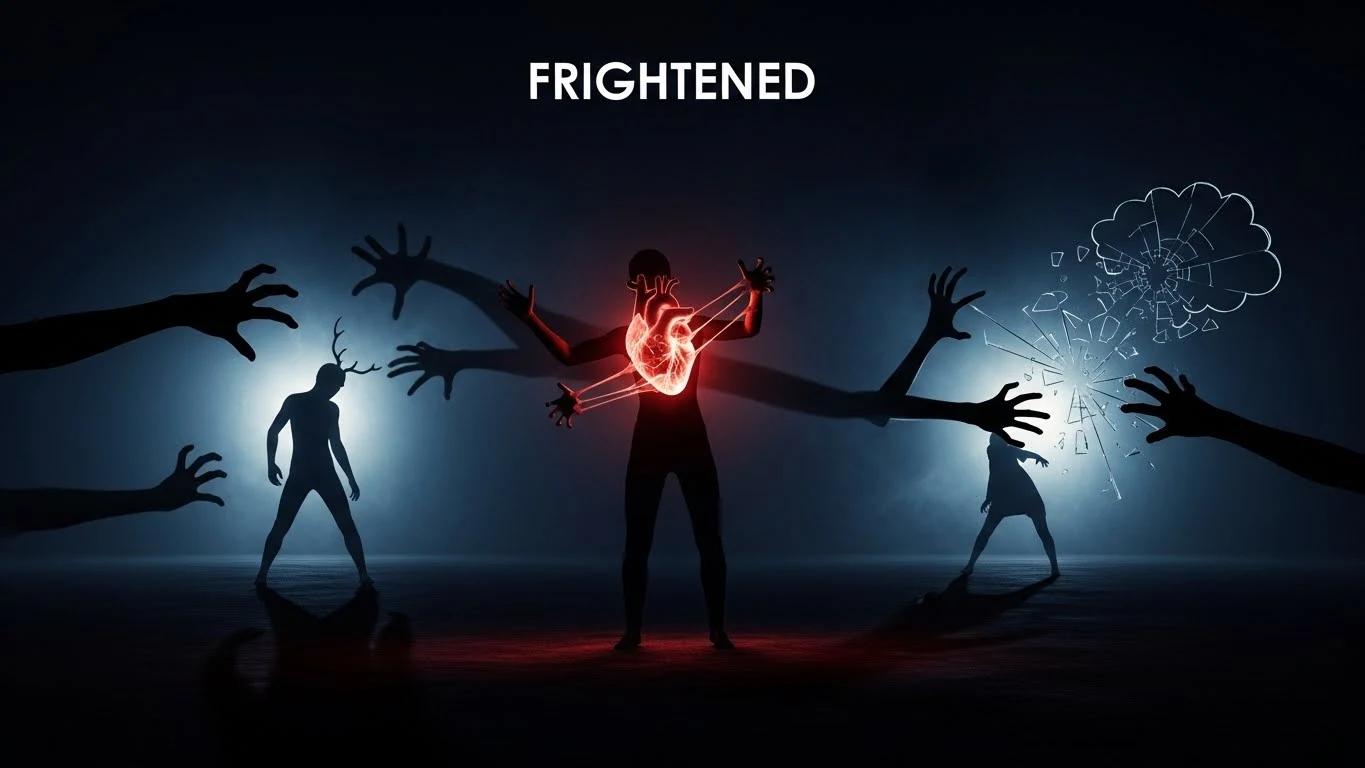
Have you ever tried to explain how scared someone feels, but the words just didn’t seem strong enough? That’s where similes come in.
In simple terms, similes help us compare one thing to another using words like “as” or “like.” They make feelings clearer, stronger, and more vivid in writing.
When someone is frightened, saying “they were scared” works but saying “they were shaking like a leaf in the wind” paints a picture in the reader’s mind.That picture is what makes writing feel alive.
In creative writing, similes help readers feel emotions instead of just reading about them. They are used in stories, poems, essays, and even everyday conversations.
If you are learning how to use similes in writing, you’re already on the right path to becoming a better writer.
Let’s explore similes for the frightened, look at clear examples of similes, and practice using them together in an easy and friendly way.
Examples: 20 Similes for Frightened
1. Shaking like a leaf
Meaning: Extremely scared
Explanation: Shows physical fear and weakness
Examples:
• She stood shaking like a leaf during the storm.
• He was shaking like a leaf before the exam.
2. As scared as a mouse
Meaning: Very timid or frightened
Explanation: Compares fear to a small, nervous animal
Examples:
• The child looked as scared as a mouse.
• He felt as scared as a mouse in the dark room.
3. Frozen like ice
Meaning: Too scared to move
Explanation: Fear causes stillness
Examples:
• She froze like ice when she heard the noise.
• He stood frozen like ice at the doorway.
4. Pale like a ghost
Meaning: Fear drained color from the face
Explanation: Shows shock and fear
Examples:
• Her face went pale like a ghost.
• He looked pale like a ghost after the scream.
5. Heart pounding like a drum
Meaning: Strong fear response
Explanation: Shows fast heartbeat due to fear
Examples:
• His heart pounded like a drum in the dark.
• She felt her heart pounding like a drum.
6. As jumpy as a cat
Meaning: Easily scared
Explanation: Shows nervous reactions
Examples:
• He was as jumpy as a cat that night.
• She felt as jumpy as a cat at every sound.
7. Trembling like jelly
Meaning: Body shaking from fear
Explanation: Shows lack of control
Examples:
• Her hands were trembling like jelly.
• He stood trembling like jelly.
8. Silent like a grave
Meaning: Too frightened to speak
Explanation: Fear causes silence
Examples:
• The room went silent like a grave.
• He stayed silent like a grave in fear.
9. Wide-eyed like an owl
Meaning: Alert and scared
Explanation: Eyes open wide from fear
Examples:
• She stared wide-eyed like an owl.
• He looked wide-eyed like an owl in the shadows.
10. As nervous as a rabbit
Meaning: Easily frightened
Explanation: Rabbits react quickly to danger
Examples:
• He felt as nervous as a rabbit.
• She acted as nervous as a rabbit all day.
11. Breath caught like a knot
Meaning: Fear makes breathing hard
Explanation: Shows tension
Examples:
• Her breath caught like a knot.
• His breath felt caught like a knot in fear.
12. Cold like winter air
Meaning: Fear chills the body
Explanation: Fear causes a cold sensation
Examples:
• Fear made him feel cold like winter air.
• She felt cold like winter air inside.
13. Hiding like a turtle
Meaning: Fear makes someone withdraw
Explanation: Shows protective behavior
Examples:
• He was hiding like a turtle.
• She pulled back like a turtle in fear.
14. Stiff like a board
Meaning: Fear causes stiffness
Explanation: Shows tense body language
Examples:
• He stood stiff like a board.
• She felt stiff like a board when scared.
15. Whispering like a breeze
Meaning: Fear lowers the voice
Explanation: Shows cautious behavior
Examples:
• She spoke whispering like a breeze.
• He answered whispering like a breeze.
16. Clinging like a child
Meaning: Fear causes need for safety
Explanation: Shows emotional fear
Examples:
• She was clinging like a child.
• He stayed close, clinging like a child.
17. Eyes darting like fish
Meaning: Watching for danger
Explanation: Shows alert fear
Examples:
• His eyes darted like fish.
• She looked around, eyes darting like fish.
18. Quiet like snowfall
Meaning: Fearful silence
Explanation: Soft, tense quietness
Examples:
• The room was quiet like snowfall.
• They waited, quiet like snowfall.
19. Heart sinking like a stone
Meaning: Sudden fear or dread
Explanation: Emotional fear reaction
Examples:
• His heart sank like a stone.
• She felt her heart sinking like a stone.
20. As scared as thunder-shy dog
Meaning: Extreme fear
Explanation: Strong reaction to loud danger
Examples:
• He was as scared as a thunder-shy dog.
• She looked as scared as a thunder-shy dog.
Practical Exercise: Try It Yourself
Questions
- Complete: Shaking like a ______.
- Which simile shows silence?
- Fill in: As scared as a ______.
- Which simile shows frozen fear?
- Complete: Heart pounding like a ______.
- Which simile shows hiding behavior?
- Fill in: Pale like a ______.
- Which simile shows alert eyes?
- Complete: Stiff like a ______.
- Which simile shows fear through quietness?
Answers with Explanations
- Leaf – Shows shaking fear
- Silent like a grave – Shows deep silence
- Mouse – Small and timid
- Frozen like ice – Fear stops movement
- Drum – Fast heartbeat
- Hiding like a turtle – Protective fear
- Ghost – Fear drains color
- Wide-eyed like an owl – Alert fear
- Board – Body stiffens
- Quiet like snowfall – Soft fear silence
Conclusion
Similes are powerful tools that make writing more expressive and fun. When you use similes for fear, you help readers clearly imagine fear instead of just reading about it. In simple terms, similes turn emotions into pictures.
Whether you are writing a story, poem, or simple sentence, using creative writing similes can instantly improve your work. The more you practice, the easier it becomes to spot and create your own simple sentences.
So next time you write, don’t just say someone is scared. Compare that fear to something familiar. Try it, play with it, and enjoy how your writing comes alive.

I am Elijah is a visionary writer and creative storyteller, blending imagination with insight to craft words that linger. Known for his fresh perspectives and thought-provoking narratives, Alijah inspires readers to explore the depth of language and the art of expression. As the creative force behind Similixs.com, he shares an endless collection of similes, metaphors, and writing tools to ignite creativity and elevate storytelling for writers everywhere.