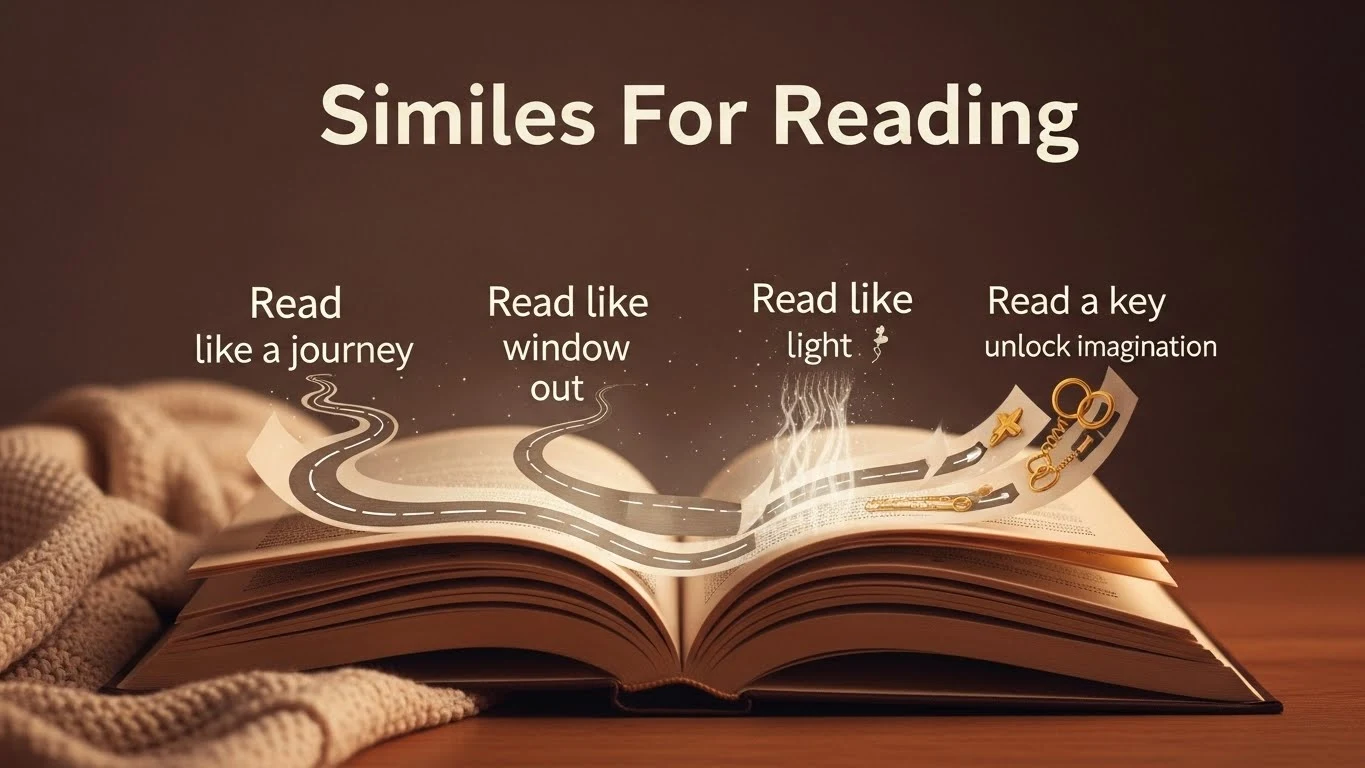
If you’ve ever said a book was “like a best friend” or reading felt “like traveling without moving,” then guess what you were already using similes.
In simple terms, similes are comparisons that help us explain ideas more clearly and creatively. They use words like “like” or “as” to connect two things in a meaningful way.
When it comes to reading, similes make experiences more vivid. Instead of just saying “I enjoy reading,” a simile lets you show that feeling in action. For example, you might say reading is like opening a door to another world. That single line paints a picture, sparks imagination, and makes your writing more enjoyable.
In creative writing, similes are powerful tools. They help beginners express thoughts, improve storytelling, and make sentences more interesting. Whether you’re a student, blogger, or casual writer, learning how to use similes in writing can instantly level up your skills.
So let’s explore similes for reading, look at clear examples, and learn how to create your own step by step, no pressure, just learning together.
20 Similes for Reading (With Meaning & Examples)
1. Reading is like opening a door to another world
Meaning: Reading lets you escape reality.
Explanation: It shows imagination and adventure.
Examples:
- Reading is like opening a door to another world full of magic.
- For her, reading felt like opening a door to another world.
2. Reading is like traveling without moving
Meaning: Books take you places mentally.
Explanation: It compares books to journeys.
Examples:
- Reading is like traveling without moving from your chair.
- He reads daily because it’s like traveling without moving.
3. A good book is like a best friend
Meaning: Books give comfort and company.
Explanation: It shows emotional connection.
Examples:
- A good book is like a best friend on lonely days.
- During exams, books became like best friends.
4. Reading flows like a calm river
Meaning: Reading feels smooth and relaxing.
Explanation: It shows ease and peace.
Examples:
- The story flowed like a calm river.
- Her reading flowed like a calm river at night.
5. Reading is like feeding the mind
Meaning: Reading gives knowledge.
Explanation: It compares learning to eating.
Examples:
- Reading is like feeding the mind healthy food.
- Daily reading is like feeding the mind.
6. Reading is like solving a puzzle
Meaning: Reading requires thinking.
Explanation: It shows curiosity and focus.
Examples:
- Mystery novels feel like solving a puzzle.
- Reading that book was like solving a puzzle.
7. A book is like a treasure chest
Meaning: Books hold valuable ideas.
Explanation: It shows hidden value.
Examples:
- Every book is like a treasure chest of ideas.
- Old books feel like a treasure chest.
8. Reading is like a mental workout
Meaning: It strengthens the brain.
Explanation: Shows effort and growth.
Examples:
- Reading daily is like a mental workout.
- Challenging books are like a mental workout.
9. Words dance like music on the page
Meaning: Writing feels beautiful.
Explanation: It shows enjoyment.
Examples:
- In poetry, words dance like music on the page.
- Her novel made words dance like music.
10. Reading is like a quiet conversation
Meaning: Reading feels personal.
Explanation: Shows calm connection.
Examples:
- Reading feels like a quiet conversation with the author.
- Books are like quiet conversations at night.
11. A story grips you like a magnet
Meaning: The story is engaging.
Explanation: Shows strong attraction.
Examples:
- The novel gripped me like a magnet.
- Good stories pull readers like magnets.
12. Reading is like lighting a candle in the dark
Meaning: Reading brings clarity.
Explanation: It shows hope and understanding.
Examples:
- Reading history is like lighting a candle in the dark.
- Books light candles in dark minds.
13. Books stack like stepping stones
Meaning: Each book helps growth.
Explanation: Shows progress.
Examples:
- Books stack like stepping stones to wisdom.
- Reading felt like stepping on stones forward.
14. Reading feels like a warm blanket
Meaning: Reading is comforting.
Explanation: Shows emotional warmth.
Examples:
- Reading before bed feels like a warm blanket.
- Her favorite novel was a warm blanket.
15. Reading opens the mind like a window
Meaning: Reading brings new ideas.
Explanation: Shows awareness.
Examples:
- Reading opens the mind like a window.
- Books open windows to new thoughts.
16. A page turns like a heartbeat
Meaning: Reading creates excitement.
Explanation: Shows rhythm and emotion.
Examples:
- The pages turned like a heartbeat.
- His thriller moved like a heartbeat.
17. Reading is like planting seeds of thought
Meaning: Ideas grow over time.
Explanation: Shows long-term impact.
Examples:
- Reading is like planting seeds of thought.
- Books plant ideas that grow later.
18. A book pulls you in like quicksand
Meaning: Hard to stop reading.
Explanation: Shows deep engagement.
Examples:
- The novel pulled me in like quicksand.
- That series feels like quicksand.
19. Reading is like listening to a wise voice
Meaning: Books teach lessons.
Explanation: Shows guidance.
Examples:
- Reading feels like listening to a wise voice.
- Classics sound like wise voices.
20. Reading sparkles like a new idea
Meaning: Reading inspires creativity.
Explanation: Shows excitement.
Examples:
- Reading sparkles like a new idea.
- Each chapter sparkled with ideas.
Practical Exercise: Try It Yourself
Questions
- Complete: Reading is like ___ without moving.
- Identify the simile: Books open windows to the world.
- Fill in: A good story grips you like ___.
- Is this a simile? Reading feeds the brain.
- Choose the simile:
a) Reading is fun
b) Reading is like traveling - Complete: Words dance like ___.
- Identify the comparison: A book is a treasure chest.
- Fill in: Reading feels like a ___ blanket.
- True or false: Similes use “like” or “as.”
- Create a simile for reading.
Answers & Explanations
- Traveling compares reading to journeys.
- The window shows a comparison.
- Magnet shows attraction.
- Yes, compare reading to feeding.
- b uses “like.”
- Music shows beauty.
- Treasure chest hidden value.
- Warm comfort.
- True basic rule of similes.
- Any creative comparison using “like” or “as.”
Conclusion
Similes are one of the easiest and most powerful tools in creative writing. They help you explain ideas clearly, make your sentences more engaging, and turn simple thoughts into vivid images. When it comes to reading, similes allow you to describe emotions, experiences, and imagination in a way that feels natural and relatable.
In simple terms, similes connect what we know to what we want to explain. That’s why they’re perfect for beginners learning how to use similes in writing. The more you read and practice, the better your smiles will become.
So next time you pick up a book, pay attention to how it feels and try turning that feeling into a simile. With practice, your writing will grow clearer, stronger, and more creative, one comparison at a time.

I am James is a passionate writer and educator at Simlixs.com, where he focuses on making creative writing simple, engaging, and easy to understand. His goal is to help students, beginners, and language learners improve their writing skills through clear explanations and relatable examples.