If you’ve ever tried to describe a river in your writing, you might have felt stuck using the same old words like flowing or moving. This is where similes for rivers can make your writing come alive. A simile is a simple comparison that helps readers see, feel, and imagine what you’re describing. In simple terms, similes compare one thing to another using “like” or “as.”
In creative writing, rivers are powerful symbols. They can show life, time, strength, calmness, or even danger. When you use similes, you turn an ordinary river into something memorable. For example, instead of saying “the river moved fast,” you might say “the river raced like a wild horse.” That one line paints a clear picture in the reader’s mind.
In this blog post, let’s explore what similes really mean, how to use similes in writing, and plenty of examples of similes focused on rivers. By the end, you’ll not only understand similes better but also feel confident creating your own.
20 Similes for River (With Meaning & Examples)
1. The river flowed like a silver ribbon
- Meaning: Smooth and shiny movement
- Conveys: Beauty and grace
- Examples:
- The river flowed like a silver ribbon through the valley.
- At sunset, it looked like a silver ribbon under the sky.
2. The river rushed like a wild horse
- Meaning: Fast and powerful
- Conveys: Energy and strength
- Examples:
- After the storm, the river rushed like a wild horse.
- The river sounded fierce as it ran like a wild horse.
- Read more: Similes for Being Strong (With Meaning, Examples & Practice)
3. The river moved like time itself
- Meaning: Constant and unstoppable
- Conveys: Continuity and life
- Examples:
- The river moved like time itself, never stopping.
- I watched it flow like time itself.
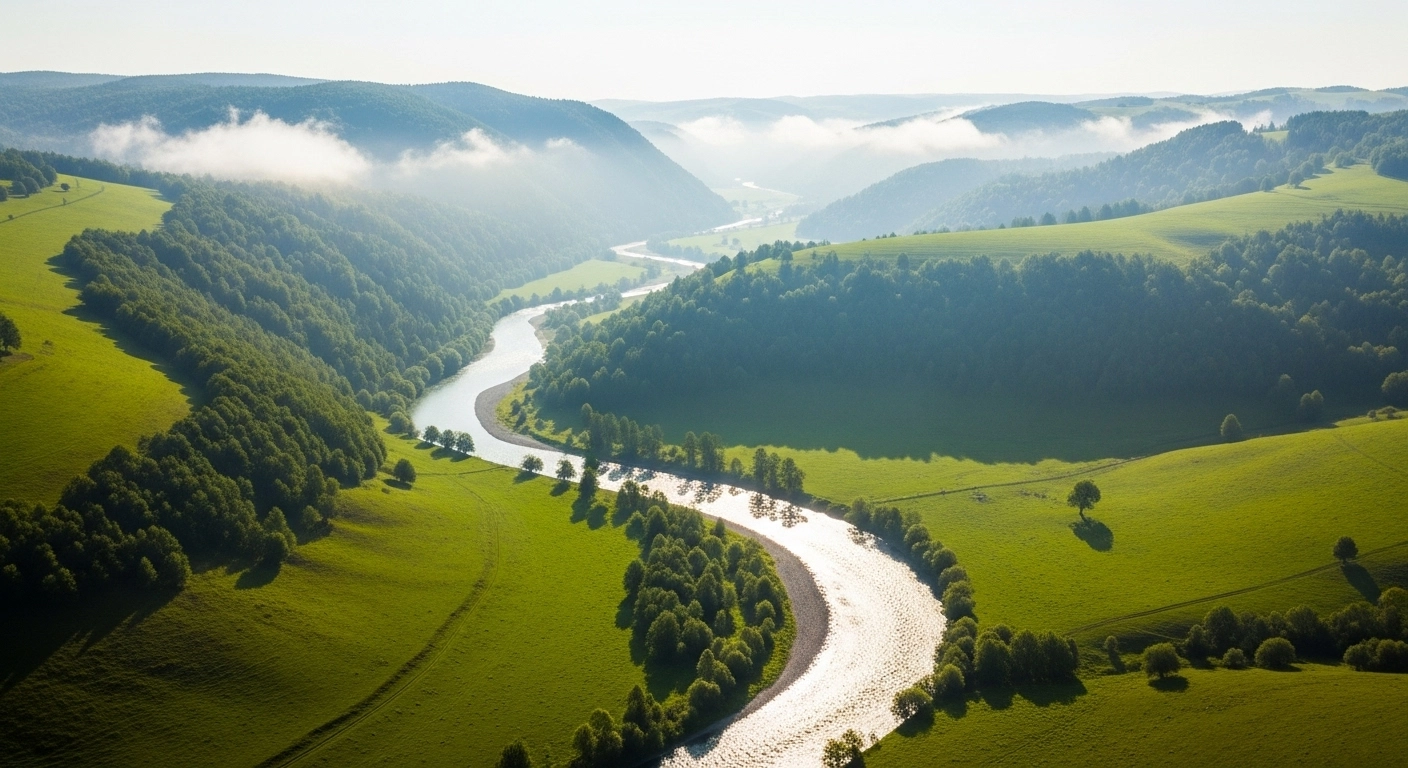
4. The river twisted like a long snake
- Meaning: Curving and winding
- Conveys: Flexibility and shape
- Examples:
- The river twisted like a long snake through the forest.
- From above, it looked like a snake resting on land.
- Read more: Similes for Better:(Simple Examples to Improve Your Writing) 2026
5. The river sparkled like scattered diamonds
- Meaning: Bright and shining
- Conveys: Beauty and light
- Examples:
- The river sparkled like scattered diamonds in the sun.
- Morning light made it shine like diamonds.
6. The river roared like a hungry lion
- Meaning: Loud and powerful
- Conveys: Danger and force
- Examples:
- During floods, the river roared like a hungry lion.
- We heard it roaring like a lion at night.
7. The river slid like glass
- Meaning: Very smooth
- Conveys: Calmness
- Examples:
- At dawn, the river slid like glass.
- The boat moved easily as the river flowed like glass.
8. The river ran like a marathon runner
- Meaning: Long and steady
- Conveys: Endurance
- Examples:
- The river ran like a marathon runner across the land.
- It kept moving like a runner who never stops.
9. The river whispered like a quiet song
- Meaning: Soft sound
- Conveys: Peace
- Examples:
- At night, the river whispered like a quiet song.
- I slept listening to its soft song.
10. The river spread like melted paint
- Meaning: Wide and flowing
- Conveys: Artistic imagery
- Examples:
- The river spread like melted paint after the rain.
- Water covered the land like spilled paint.
11. The river danced like a playful child
- Meaning: Light and joyful movement
- Conveys: Happiness
- Examples:
- In spring, the river danced like a playful child.
- Small waves made it look joyful.
12. The river cut through land like a sharp knife
- Meaning: Strong erosion
- Conveys: Power
- Examples:
- The river cut through rock like a sharp knife.
- Over the years, it sliced the land deeply.
13. The river crawled like a tired traveler
- Meaning: Slow movement
- Conveys: Exhaustion
- Examples:
- In summer heat, the river crawled like a tired traveler.
- It barely moved under the sun.
14. The river shimmered like silk
- Meaning: Soft and smooth shine
- Conveys: Elegance
- Examples:
- The river shimmered like silk at sunset.
- Light made it look silky and calm.
15. The river flowed like a storyteller
- Meaning: Continuous and expressive
- Conveys: History and emotion
- Examples:
- The river flowed like a storyteller of old times.
- Each bend felt like a new story.
16. The river crashed like thunder
- Meaning: Extremely loud
- Conveys: Fear and drama
- Examples:
- Waterfalls made the river crash like thunder.
- Its sound echoed loudly.
17. The river curved like a ribbon in the wind
- Meaning: Gentle curves
- Conveys: Grace
- Examples:
- The river curved like a ribbon in the wind.
- It bent softly through the fields.
18. The river stretched like a long road
- Meaning: Length and direction
- Conveys: Journey
- Examples:
- The river stretched like a long road to the sea.
- It guided travelers for miles.
19. The river glided like a swan
- Meaning: Smooth and calm
- Conveys: Peace
- Examples:
- The river glided like a swan across the plain.
- Boats moved quietly on it.
20. The river surged like a charging bull
- Meaning: Sudden force
- Conveys: Danger
- Examples:
- After rain, the river surged like a charging bull.
- It became powerful and wild.
Practical Exercise: Similes Practice
Questions
- Complete: The river flowed like a _______.
- Identify the simile: The river moved like time itself.
- Fill in: The river roared like a _______.
- Which word makes this a simile: like or and?
- Create a simile for a calm river.
- Create a simile for a dangerous river.
- Identify the comparison: The river twisted like a snake.
- Complete: The river sparkled like _______.
- Is this a simile? The river is a mirror.
- Write one simple sentence for a river at night.
Answers (With Explanation)
- Silver ribbon – compares smooth movement
- River and time – shows constant flow
- Lion – shows loud power
- Like – similes use “like” or “as”
- Example: like glass – shows calmness
- Example: like a charging bull – shows danger
- River and snake – shape comparison
- Diamonds – shows brightness
- No – that’s a metaphor, not a simile
- Example: The river whispered like a lullaby.
Conclusion
Similes are one of the easiest and most powerful tools in creative writing. They help turn simple descriptions into vivid images that readers can feel and remember. When you use similes for the river, you give your writing movement, emotion, and life. Whether you’re writing a story, poem, or essay, similes make your words stronger and clearer.
Now that you’ve explored the meaning of similes, seen many simile sentences, and practiced using them, it’s your turn. Try creating your own similes based on rivers you’ve seen or imagined. The more you practice, the more natural it will feel. Keep writing, keep comparing, and let your creativity flow just like a river.
I am Theodore is a creative content writer at Simlixs.com who focuses on similes and simple language learning. He writes clear, engaging content to help readers improve their writing skills.