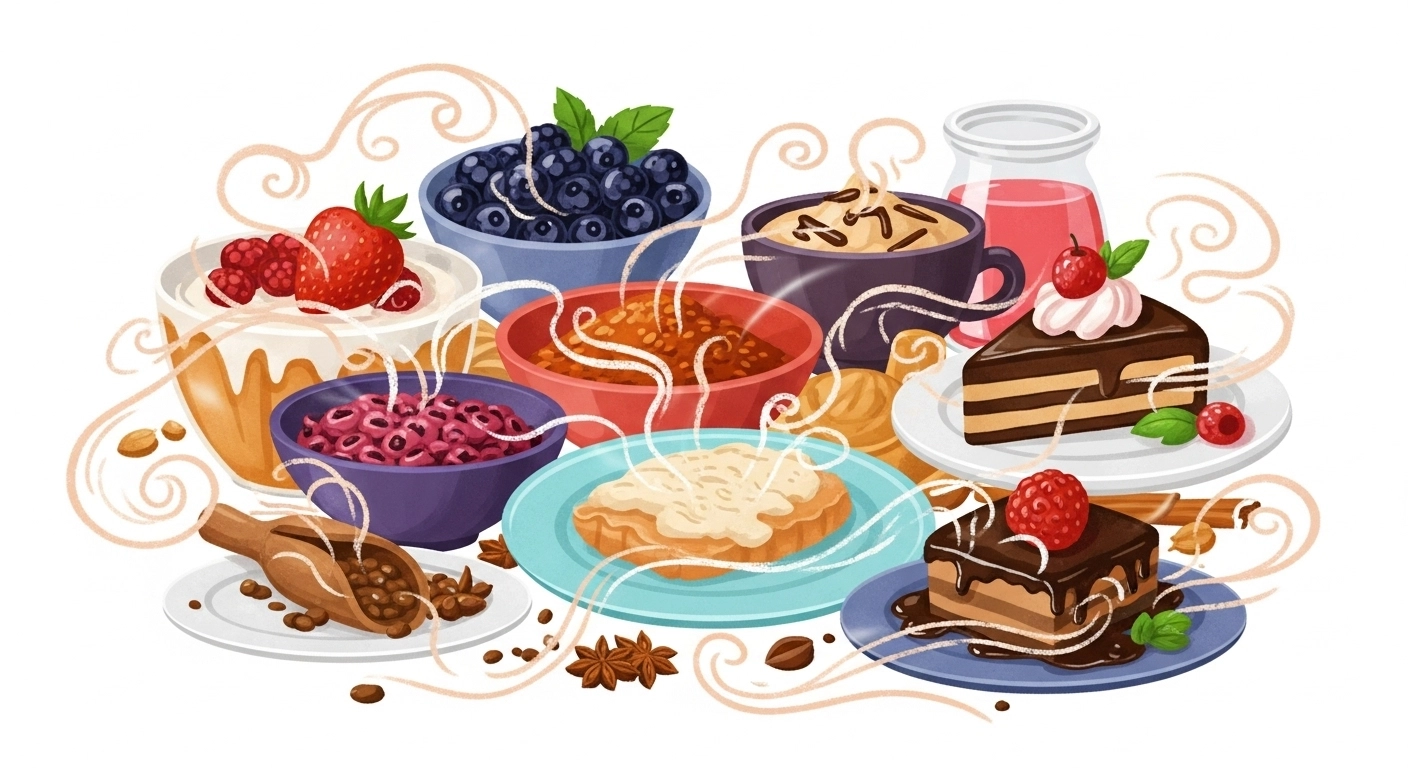
Have you ever tried to explain how something tastes and feels stuck? You know it’s sweet, sour, or spicy but the words don’t quite do it justice. That’s where similes for taste come in. In simple terms, similes help us compare one thing to another using like or as.
When we use similes for taste, we turn ordinary food descriptions into vivid experiences readers can almost taste themselves.For example, instead of saying “the candy was sweet,” you might say “the candy was sweet like honey dripping from a spoon.” See the difference? Suddenly, the taste feels richer and more real.
If you’re learning creative writing, similes are one of the easiest tools to master. They make your writing more colorful, more emotional, and more memorable. In this post, let’s explore what similes are, why they matter, and how to use them naturally. By the end, you’ll understand the meaning of similes, see plenty of examples of similes, and feel confident creating your own simile sentences for taste.
20 Similes for Taste (With Meaning & Examples)
1. The cake tasted as sweet as honey.
Meaning: Very sweet.
Explanation: Compares sweetness to natural honey.
Examples:
- The cake tasted as sweet as honey.
- Her words were as sweet as honey.
2. The lemon was sour like vinegar.
Meaning: Extremely sour.
Explanation: Shows sharp, biting taste.
Examples:
- The lemon was sour like vinegar.
- His expression turned sour like vinegar.
Read mora: Similes for Grateful:(Meaning, Practice with Examples,) 2026
3. The soup was as salty as the sea.
Meaning: Too salty.
Explanation: Emphasizes excess salt.
Examples:
- The soup was as salty as the sea.
- His tears tasted salty like seawater.
4. The chocolate melted like silk on my tongue.
Meaning: Smooth and rich.
Explanation: Shows luxury and softness.
Examples:
- The chocolate melted like silk.
- The dessert felt smooth and rich.
Read more: Similes for Chaos:(Meaning ,Writing with Examples) for 2026
5. The chili burned like fire in my mouth.
Meaning: Very spicy.
Explanation: Highlights heat and pain.
Examples:
- The chili burned like fire.
- The sauce felt like flames.
6. The fruit tasted fresh like morning dew.
Meaning: Clean and refreshing.
Explanation: Suggests natural freshness.
Examples:
- The fruit tasted fresh like dew.
- The salad felt light and crisp.
7. The medicine was bitter like poison.
Meaning: Extremely bitter.
Explanation: Shows unpleasant taste.
Examples:
- The medicine was bitter like poison.
- The drink left a bitter taste.
8. The ice cream was cold like snow.
Meaning: Very cold and refreshing.
Explanation: Creates a clear sensory image.
Examples:
- The ice cream was cold like snow.
- The dessert chilled my mouth.
9. The bread tasted dry like sand.
Meaning: Very dry.
Explanation: Shows lack of moisture.
Examples:
- The bread tasted dry like sand.
- The cake crumbled in my mouth.
10. The coffee was strong like dark chocolate.
Meaning: Rich and intense flavor.
Explanation: Suggests depth and boldness.
Examples:
- The coffee was strong like chocolate.
- He likes bold flavors.
11. The candy was sweet like sugar crystals.
Meaning: Pure sweetness.
Explanation: Highlights sugary taste.
Examples:
- The candy was sweet like crystals.
- The syrup tasted sweet.
12. The cheese tasted sharp like a blade.
Meaning: Strong, sharp flavor.
Explanation: Shows intensity.
Examples:
- The cheese tasted sharp like a blade.
- The flavor hit instantly.
13. The soup was bland like plain water.
Meaning: No flavor.
Explanation: Shows dullness.
Examples:
- The soup was bland like water.
- The meal lacked taste.
14. The apple was crisp like a fresh snap.
Meaning: Crunchy and fresh.
Explanation: Focuses on texture and taste.
Examples:
- The apple was crisp like a snap.
- Each bite felt fresh.
15. The sauce tasted rich like butter.
Meaning: Smooth and creamy.
Explanation: Suggests fullness.
Examples:
- The sauce tasted rich like butter.
- The dish felt indulgent.
16. The drink was fizzy like popping bubbles.
Meaning: Sparkling taste.
Explanation: Shows lively texture.
Examples:
- The drink was fizzy like bubbles.
- Soda popped on my tongue.
17. The meat was tender like soft bread.
Meaning: Easy to chew.
Explanation: Shows softness.
Examples:
- The meat was tender like bread.
- Each bite was smooth.
18. The candy tasted sour like green apples.
Meaning: Sharp sourness.
Explanation: Familiar sour comparison.
Examples:
- The candy tasted sour like apples.
- The flavor made me wince.
19. The soup tasted warm like comfort itself.
Meaning: Soothing taste.
Explanation: Emotional connection.
Examples:
- The soup tasted warm and comforting.
- It felt like home.
20. The dessert was light like whipped clouds.
Meaning: Soft and airy.
Explanation: Shows delicacy.
Examples:
- The dessert was light like clouds.
- It melted instantly.
Practical Exercise: Practice Similes for Taste
Questions
- Complete: The lemon was sour like _______.
- Identify the smile: “The cake was sweet like honey.”
- Fill in: The chili burned like _______.
- Is this a simile? “The soup was salty.”
- Choose a simile for bitter taste.
- Complete: The apple was crisp like _______.
- What does “melted like silk” suggest?
- Identify the comparison word.
- Complete: The coffee was strong like _______.
- Create your own simile for sweet taste.
Answers (With Explanations)
- Vinegar – shows sharp sourness.
- Yes – it uses like.
- Fire – shows heat.
- No – no comparison.
- Bitter like poison – unpleasant taste.
- A snap – crunchy texture.
- Smooth and rich taste.
- Like / as – simile markers.
- Dark chocolate – bold flavor.
- Example: Sweet like sugar.
Conclusion
Similes help turn simple food descriptions into vivid experiences. When you use similes for taste, readers don’t just read your words, they feel them. From sweet desserts to bitter medicine, similes make flavors come alive and add emotion to your writing.
The best way to improve is to practice. Taste your food, think about what it reminds you of, and turn that thought into a comparison. Over time, using creative writing similes will feel natural and fun. So keep experimenting, keep tasting, and start creating your own similes today.

I am Theodore is a creative content writer at Simlixs.com who focuses on similes and simple language learning. He writes clear, engaging content to help readers improve their writing skills.