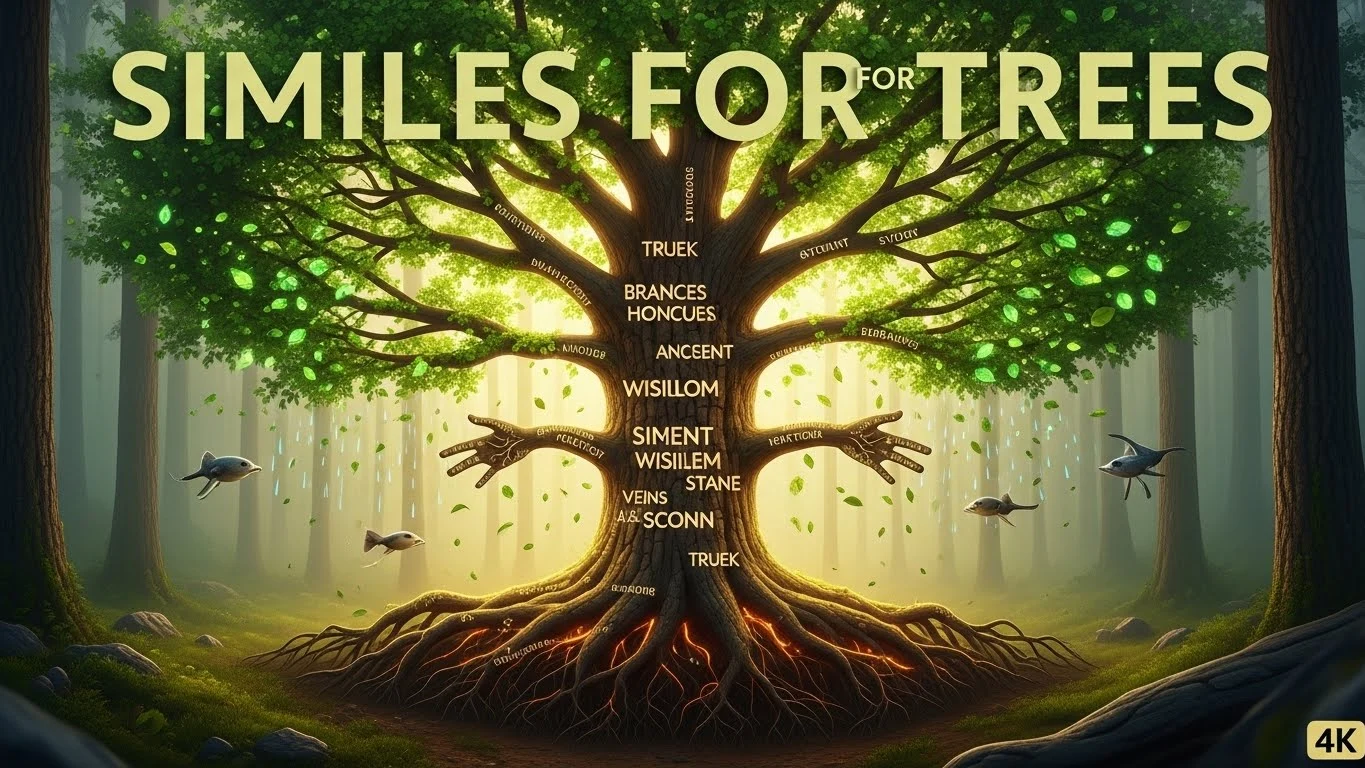
If you’ve ever read a line like “the tree stood like a silent guard,” you’ve seen a simile in action. In simple terms, a simile is a comparison that uses “like” or “as” to help the reader picture something more clearly.
When it comes to similes for trees, writers use them to show strength, beauty, age, calm, or even mystery.
Similes make writing feel alive. They turn plain sentences into pictures you can see and feel. For example, instead of saying “the tree was tall,” you might say “the tree was tall like a tower.” That one small change makes a big difference.
If you’re new to creative writing, similes are one of the easiest tools to learn. You don’t need fancy words. You just need to notice how things look, move, or feel.
In this guide, let’s explore clear examples of similes, their meanings, and how to use similes in writing. By the end, you’ll be ready to create your own simple sentences with confidence.
20 Similes for Trees (With Meaning and Examples)
1. The tree stood like a silent guard.
- Meaning: The tree looks protective and watchful.
- What it conveys: Strength and stillness.
- Examples:
- The old oak stood like a silent guard at the gate.
- At night, the tree stood like a silent guard over the yard.
2. The tree swayed like a dancer.
- Meaning: The tree moves smoothly.
- What it conveys: Grace and motion.
- Examples:
- In the wind, the tree swayed like a dancer.
- Tall trees sway like dancers during storms.
3. The tree was as tall as a tower.
- Meaning: The tree is very tall.
- What it conveys: Height and power.
- The pine was as tall as a tower.
- Trees as tall as towers lined the road.
4. The tree spread its branches like open arms.
- Meaning: The branches reach outward.
- What it conveys: Welcome and warmth.
- Examples:
- The tree spread its branches like open arms.
- She rested under a tree with branches like open arms.
5. The tree’s leaves fluttered like birds.
- Meaning: The leaves move quickly.
- What it conveys: Life and energy.
- Examples:
- Leaves fluttered like birds in the breeze.
- The tree shook, its leaves like birds in flight.
6. The tree was rooted like a stubborn mule.
- Meaning: The tree will not move.
- What it conveys: Firmness and strength.
- Examples:
- The tree stayed rooted like a stubborn mule.
- Old trees stand rooted like stubborn mules.
7. The tree bent like a bow.
- Meaning: The tree curves under pressure.
- What it conveys: Flexibility.
- Examples:
- In the storm, the tree bent like a bow.
- Trees bent like bows in the strong wind.
8. The tree’s bark was rough like sandpaper.
- Meaning: The bark feels coarse.
- What it conveys: Texture.
- Examples:
- The bark felt rough like sandpaper.
- He touched a tree rough like sandpaper.
9. The tree stood alone like a lonely giant.
- Meaning: The tree is isolated.
- What it conveys: Loneliness and size.
- Examples:
- One tree stood like a lonely giant in the field.
- The hill had a tree, alone like a lonely giant.
10. The tree shook like it was shivering.
- Meaning: The tree moves fast in the wind.
- What it conveys: Cold or fear.
- Examples:
- The tree shook like it was shivering.
- In the rain, trees shook like they were shivering.
11. The tree was as old as time.
- Meaning: The tree is very old.
- What it conveys: Age and wisdom.
- Examples:
- That tree looked as old as time.
- Trees as old as time filled the forest.
12. The tree’s shadow stretched like a blanket.
- Meaning: The shadow covers a wide area.
- What it conveys: Comfort and shade.
- Examples:
- The shadow stretched like a blanket.
- We sat where the tree’s shadow lay like a blanket.
13. The tree cracked like thunder.
- Meaning: The sound was loud.
- What it conveys: Power and danger.
- Examples:
- The tree cracked like thunder in the storm.
- A branch snapped like thunder.
14. The tree grew like a child.
- Meaning: The tree grows steadily.
- What it conveys: Life and progress.
- Examples:
- The tree grew like a child each year.
- Trees grow like children when cared for.
15. The tree stood firm like a rock.
- Meaning: The tree does not move.
- What it conveys: Stability.
- Examples:
- The tree stood firm like a rock.
- Trees stood like rocks against the wind.
16. The tree’s roots spread like veins.
- Meaning: Roots go in many directions.
- What it conveys: Connection and life.
- Examples:
- Roots spread like veins underground.
- The tree’s veins-like roots held the soil.
17. The tree whispered like a secret.
- Meaning: Leaves make soft sounds.
- What it conveys: Mystery.
- Examples:
- The tree whispered like a secret.
- At night, trees whisper like secrets.
18. The tree stood proud like a king.
- Meaning: The tree looks strong and tall.
- What it conveys: Pride.
- Examples:
- The oak stood proud like a king.
- Trees stood like kings along the road.
19. The tree glowed like gold in autumn.
- Meaning: Leaves are bright in fall.
- What it conveys: Beauty.
- Examples:
- The tree glowed like gold in autumn.
- Autumn trees glow like gold.
20. The tree leaned like a tired man.
- Meaning: The tree tilts to one side.
- What it conveys: Age or wear.
- Examples:
- The tree leaned like a tired man.
- Old trees lean like tired men.
Practical Exercise: Test Your Simile Skills
Questions
- Complete: The tree stood ___ a guard.
- Which word makes a simile: like or very?
- Identify the simile: The tree was tall like a tower.
- Complete: Leaves fluttered ___ birds.
- Is this a simile? The tree is strong.
- Fill in: The bark was rough ___ sandpaper.
- Which compares movement? swayed like a dancer or green tree
- Complete: Roots spread ___ veins.
- True or false: Similes use “like” or “as.”
- Write one simile for a tree in the wind.
Answers
- like – It shows comparison.
- like – Similes use like or as.
- tall like a tower – That’s the simile.
- like – It compares leaves to birds.
- No – It does not compare.
- like – It shows texture.
- swayed like a dancer – It compares motion.
- like – Roots are compared to veins.
- True – That’s the meaning of similes.
- Example: The tree bent like a bow.
Conclusion
Similes are simple, but powerful. They help readers see what you see. With similes for trees, you can show strength, beauty, age, or motion using just a few words. That’s why similes matter so much in creative writing.
Once you understand the meaning of similes, you start noticing them everywhere. In books. In poems. Even in songs. The best part is that anyone can write them. You don’t need to be an expert. You just need to compare one thing to another in a clear way.
So now it’s your turn. Look at a tree near you. How does it stand? How does it move? What does it remind you of? Try writing your own simple sentences and let your writing grow.
About The Author