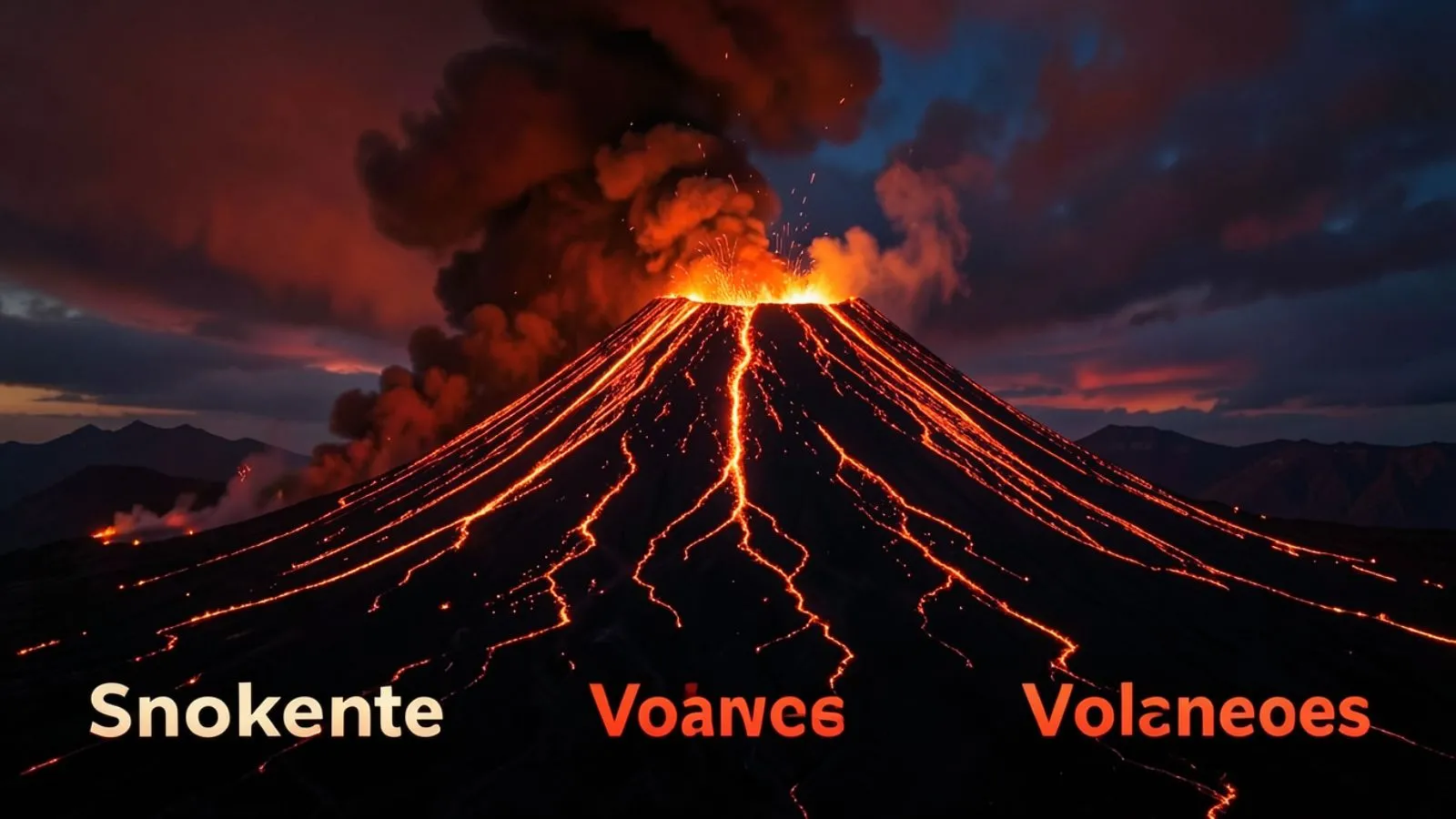
Have you ever tried to describe a volcano and felt that plain words just were not enough? Volcanoes are powerful, loud, and full of emotion. This is where similes come in. In simple terms, similes help us compare one thing to another using words like “like” or “as.” When you use similes for volcanoes, your writing becomes more vivid and exciting.
Think about it this way: saying “the volcano erupted” is fine, but saying “the volcano erupted like a furious giant” paints a clear picture in the reader’s mind. That is the magic of similes. They turn facts into feelings and scenes into stories.
In creative writing, similes help readers see, hear, and even feel what you describe. For example, volcanoes can represent anger, power, danger, or sudden change. By using similes, you make those ideas easier to understand and more fun to read.
Let’s explore some powerful examples of similes for volcanoes, learn their meanings, and see how to use them naturally in sentences.
20 Similes for Volcanoes (With Meaning & Examples)
1. The volcano roared like an angry lion.
Meaning: It was loud and fierce.
Explanation: Shows power and danger.
Examples:
- The volcano roared like an angry lion across the valley.
- At night, it roared like an angry lion waking the town.
2. Lava flowed like molten rivers of fire.
Meaning: Lava moved smoothly and intensely.
Explanation: Highlights heat and motion.
Examples:
- Lava flowed like molten rivers of fire down the slope.
- The ground glowed as lava flowed like molten rivers of fire.
Read more: Similes for Hardworking: Creative Ways to Describe Effort
3. The volcano stood like a sleeping giant.
Meaning: It looked calm but powerful.
Explanation: Suggests hidden danger.
Examples:
- The volcano stood like a sleeping giant under the stars.
- For years, it waited like a sleeping giant.
4. The eruption burst out like bottled rage.
Meaning: Anger released suddenly.
Explanation: Connects emotion to nature.
Examples:
- The eruption burst out like bottled rage.
- The mountain exploded like bottled rage at dawn.
Read more: Similes for Being Strong (With Meaning, Examples & Practice)
5. Ash fell like dark snow.
Meaning: Ash covered everything gently but heavily.
Explanation: Creates a visual image.
Examples:
- Ash fell like dark snow over the village.
- The sky turned gray as ash fell like dark snow.
6. The volcano exploded like a bomb.
Meaning: It erupted violently.
Explanation: Shows sudden destruction.
Examples:
- The volcano exploded like a bomb without warning.
- It sounded like a bomb going off.
7. Lava bubbled like boiling soup.
Meaning: Lava moved thickly and hot.
Explanation: Makes heat easy to imagine.
Examples:
- Lava bubbled like boiling soup inside the crater.
- The surface moved like boiling soup.
8. Smoke rose like a black curtain.
Meaning: Smoke covered the sky.
Explanation: Suggests darkness and fear.
Examples:
- Smoke rose like a black curtain over the sun.
- A black curtain of smoke filled the air.
9. The volcano shook like a trembling beast.
Meaning: The ground vibrated strongly.
Explanation: Adds movement and fear.
Examples:
- The volcano shook like a trembling beast.
- Houses rattled as it shook like a beast.
10. Lava poured out like glowing honey.
Meaning: Lava moved slowly and thickly.
Explanation: Shows texture and flow.
Examples:
- Lava poured out like glowing honey.
- It dripped like glowing honey down the rocks.
11. The eruption rose like a towering mushroom cloud.
Meaning: The blast went high into the sky.
Explanation: Shows size and scale.
Examples:
- Ash rose like a towering mushroom cloud.
- The sky filled with a mushroom-shaped cloud.
12. The volcano hissed like a giant snake.
Meaning: It made sharp, scary sounds.
Explanation: Adds sound detail.
Examples:
- The volcano hissed like a giant snake.
- Steam escaped like a snake’s hiss.
13. Lava cracked the land like shattered glass.
Meaning: The ground broke apart.
Explanation: Shows destruction.
Examples:
- Lava cracked the land like shattered glass.
- Roads split like glass under heat.
14. The volcano burned like an open furnace.
Meaning: It was extremely hot.
Explanation: Emphasizes heat.
Examples:
- The crater burned like an open furnace.
- Heat rose like a furnace blast.
15. Ash clouds spread like ink in water.
Meaning: Ash moved smoothly through the air.
Explanation: Creates a soft visual.
Examples:
- Ash clouds spread like ink in water.
- The sky darkened like ink in water.
16. The volcano growled like a warning drum.
Meaning: It signaled danger.
Explanation: Builds tension.
Examples:
- The volcano growled like a warning drum.
- Low rumbles sounded like drums.
17. Lava leaped like fiery waves.
Meaning: Lava moved violently.
Explanation: Shows energy.
Examples:
- Lava leaped like fiery waves.
- Flames moved like waves of fire.
18. The mountain cracked like thunder.
Meaning: Loud and sudden noise.
Explanation: Adds sound impact.
Examples:
- The mountain cracked like thunder.
- A thunder-like crack shook the valley.
19. The volcano glowed like a burning heart.
Meaning: It shined from within.
Explanation: Suggests life and danger.
Examples:
- The volcano glowed like a burning heart.
- At night, it pulsed like a heart.
20. The eruption spread like chaos unleashed.
Meaning: Everything became disorderly.
Explanation: Shows total destruction.
Examples:
- The eruption spread like chaos unleashed.
- Chaos followed as lava spread.
Practical Exercise: Test Your Skills
Questions
- The volcano roared like an _______.
- Ash fell like dark _______.
- Lava flowed like molten _______.
- The volcano stood like a sleeping _______.
- Smoke rose like a black _______.
- Lava bubbled like boiling _______.
- The eruption burst like bottled _______.
- The volcano hissed like a giant _______.
- Lava cracked the land like shattered _______.
- The volcano burned like an open _______.
Answers & Explanations
- lion – shows power
- snow – visual effect
- rivers – flow and heat
- giant – hidden strength
- curtain – darkness
- soup – thickness
- rage – emotion
- snake – sound
- glass – damage
- furnace – extreme heat
Conclusion
Similes are simple tools, but they make a big difference in writing. When you use similes for volcanoes, your words become clearer, stronger, and more emotional. Instead of just telling the reader what happened, you show them.
In creative writing, similes help readers connect ideas to images they already know. This makes your writing easier to understand and more fun to read. As you practice, try creating your own simile sentences by comparing volcanoes to animals, emotions, or everyday objects.
Keep experimenting, stay curious, and remember: great writing often starts with a simple comparison. Try writing one new simile today and watch your creativity grow.

I am Theodore is a creative content writer at Simlixs.com who focuses on similes and simple language learning. He writes clear, engaging content to help readers improve their writing skills.