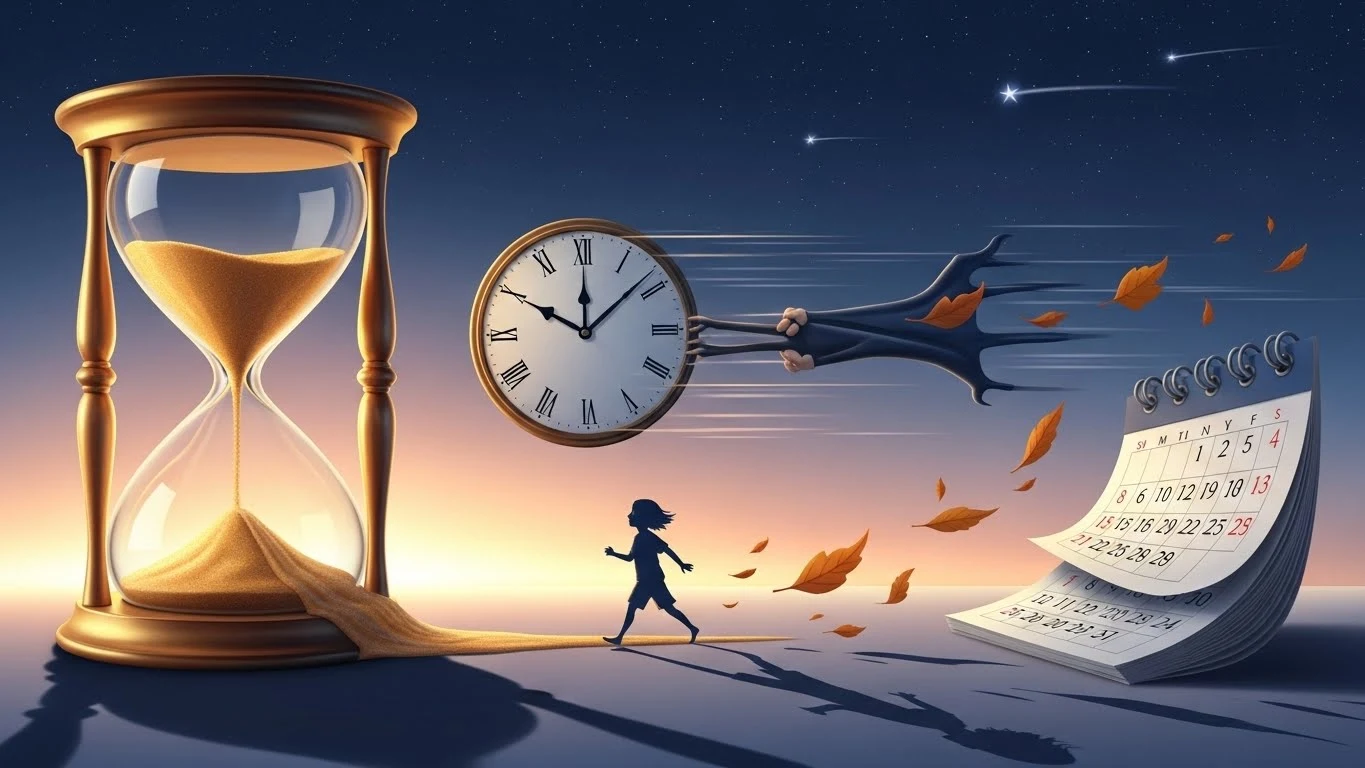
Let’s talk about time, something we all feel but can’t touch. Some days it moves slowly, like it’s stuck. Other days it flies by before we even notice.
That’s where similes for time come in. They help us explain how time feels in a clear, creative way.
In simple terms, a simile is a comparison using like or as. Writers use similes to make ideas more visual and relatable. Instead of saying “time passed quickly, you might say “time flew like a bird. That small change makes writing more interesting and easier to imagine.
Similes are a big part of creative writing. They bring life to stories, poems, and even everyday sentences. If you’re new to writing, learning similes is one of the easiest ways to improve fast.
In this guide, we’ll explore what similes mean, look at clear examples of similes for time, and help you practice using them yourself.
By the end, you’ll not only understand similes you’ll be able to create your own with confidence.
20 Similes for Time (With Meaning and Examples)
1. Time flies like the wind
Meaning: Time passes very quickly.
Explanation: It shows speed and suddenness.
Examples:
- Time flies like the wind when I’m with my friends.
- The weekend flew like the wind.
Similes Examples for Kids: Easy Meanings, Fun Uses, and Practice
2. Time crawls like a snail
Meaning: Time moves very slowly.
Explanation: Often used when waiting or bored.
Examples:
- Time crawled like a snail during the long lecture.
- The last hour of work crawled like a snail.
3. Time slips away like sand
Meaning: Time passes without notice.
Explanation: It feels impossible to hold on to.
Examples:
- Time slipped away like sand during summer vacation.
- My free time slips away like sand.
Similes for Scared That Paint a Clear Picture of Fear?
4. Time moves like a river
Meaning: Time flows constantly.
Explanation: It never stops or goes backward.
- Time moves like a river, always forward.
- Life changes as time flows like a river.
5. Time ticks like a clock
Meaning: Time passes steadily.
Explanation: Shows routine and order.
Examples:
- Time ticked like a clock during the exam.
- The night passed as time ticked like a clock.
6. Time is like a thief
Meaning: Time takes moments away.
Explanation: Often used for aging or loss.
Examples:
- Time is like a thief stealing our youth.
- Time stole my childhood like a thief.
7. Time races like a horse
Meaning: Time moves very fast.
Explanation: Suggests energy and speed.
Examples:
- Time raced like a horse on my birthday.
- The day raced like a horse.
8. Time drags like heavy feet
Meaning: Time feels slow and tiring.
Explanation: Used in dull moments.
Examples:
- Time dragged like heavy feet at work.
- The class dragged like heavy feet.
9. Time fades like a memory
Meaning: Moments slowly disappear.
Explanation: Shows loss and distance.
Examples:
- Time faded like a memory of childhood.
- Old days fade like memories with time.
10. Time rushes like a train
Meaning: Time moves fast and can’t stop.
Explanation: Suggests force and direction.
Examples:
- Time rushed like a train before exams.
- The year rushed like a train.
11. Time passes like a shadow
Meaning: Time moves quietly.
Explanation: Often unnoticed.
Examples:
- Time passed like a shadow behind me.
- Years pass like shadows.
12. Time freezes like ice
Meaning: Time seems to stop.
Explanation: Used in shocking moments.
Examples:
- Time froze like ice when I heard the news.
- In fear, time froze like ice.
13. Time rolls like a wheel
Meaning: Time keeps turning.
Explanation: Shows cycles of life.
Examples:
- Time rolls like a wheel of change.
- History turns as time rolls like a wheel.
14. Time melts like snow
Meaning: Time disappears quickly.
Explanation: Often linked with warmth or joy.
Examples:
- Time melted like snow during holidays.
- My break melted like snow.
15. Time beats like a drum
Meaning: Time moves with rhythm.
Explanation: Shows steady pace.
Examples:
- Time beat like a drum in my head.
- Days beat like drums at work.
16. Time stretches like rubber
Meaning: Time feels longer than usual.
Explanation: Common during waiting.
Examples:
- Time stretched like rubber before results.
- The night stretched like rubber.
17. Time cuts like a knife
Meaning: Time can be painful.
Explanation: Used for emotional change.
Examples:
- Time cuts like a knife after a loss.
- Healing takes time that cuts like a knife.
18. Time floats like a cloud
Meaning: Time feels soft and calm.
Explanation: Often peaceful moments.
Examples:
- Time floated like a cloud on vacation.
- Our afternoon floated like a cloud.
19. Time disappears like smoke
Meaning: Time vanishes quickly.
Explanation: Hard to catch or stop.
Examples:
- Time disappeared like smoke online.
- My free hours vanished like smoke.
20. Time marches like a soldier
Meaning: Time moves forward with purpose.
Explanation: Strong and unstoppable.
Examples:
- Time marched like a soldier into the future.
- Years march like soldiers.
Practical Exercise: Test Your Simile Skills
Questions
- Complete: Time flies like a ______.
- Which simile shows slow time?
- Fill in: Time slips away like ______.
- Identify the simile: Time moved slowly during class.
- Choose a simile for fast time.
- Complete: Time freezes like ______.
- Which simile suggests routine?
- Fill in: Time melts like ______.
- Identify the simile meaning “time is unstoppable.
- Create your own simile for time.
Answers & Explanations
- Wind – Shows speed.
- Crawls like a snail – Indicates slowness.
- Sand – Time is hard to hold.
- Time crawled like a snail – Uses “like.
- Races like a horse – Fast movement.
- Ice – Time seems to stop.
- Ticks like a clock – Shows routine.
- Snow – Disappears quickly.
- Marches like a soldier – Strong and steady.
- Any creative comparison using like or as works.
Conclusion
Similes help us explain time in ways that feel real and emotional. Instead of plain sentences, similes add color, feeling, and meaning.
They make writing easier to understand and more fun to read. Whether you’re writing a story, poem, or simple paragraph, similes can instantly improve your work.
The best part? Anyone can use them. Just compare time to something familiar using like or as. Practice often, read examples, and don’t be afraid to experiment. The more you try, the more natural it feels.
Now it’s your turn to start noticing how time feels and turn that feeling into a simile.

I am Bahadar Ali is a creative content writer at Simlixs.com who focuses on similes and simple language learning. He writes clear, engaging content to help readers improve their writing skills.
About The Author